
A trial reel is a reel Instagram shows first to people who do not follow you. Our founder publishes his reels on his personal Instagram accounts as trial reels wherever Instagram allows it, all through Mellow Hub, our publishing product. In October 2026 that taught us three things no documentation says: which error a refused trial comes with, roughly where the follower line is, and why a tool must not quietly fall back to an ordinary reel.
The situation and the goal
Instagram’s Help Center says a trial reel needs a professional account, reaches your followers only when you share it to everyone (or when Instagram decides it performs, within 72 hours), and shows insights within 24 hours. It names no follower minimum.
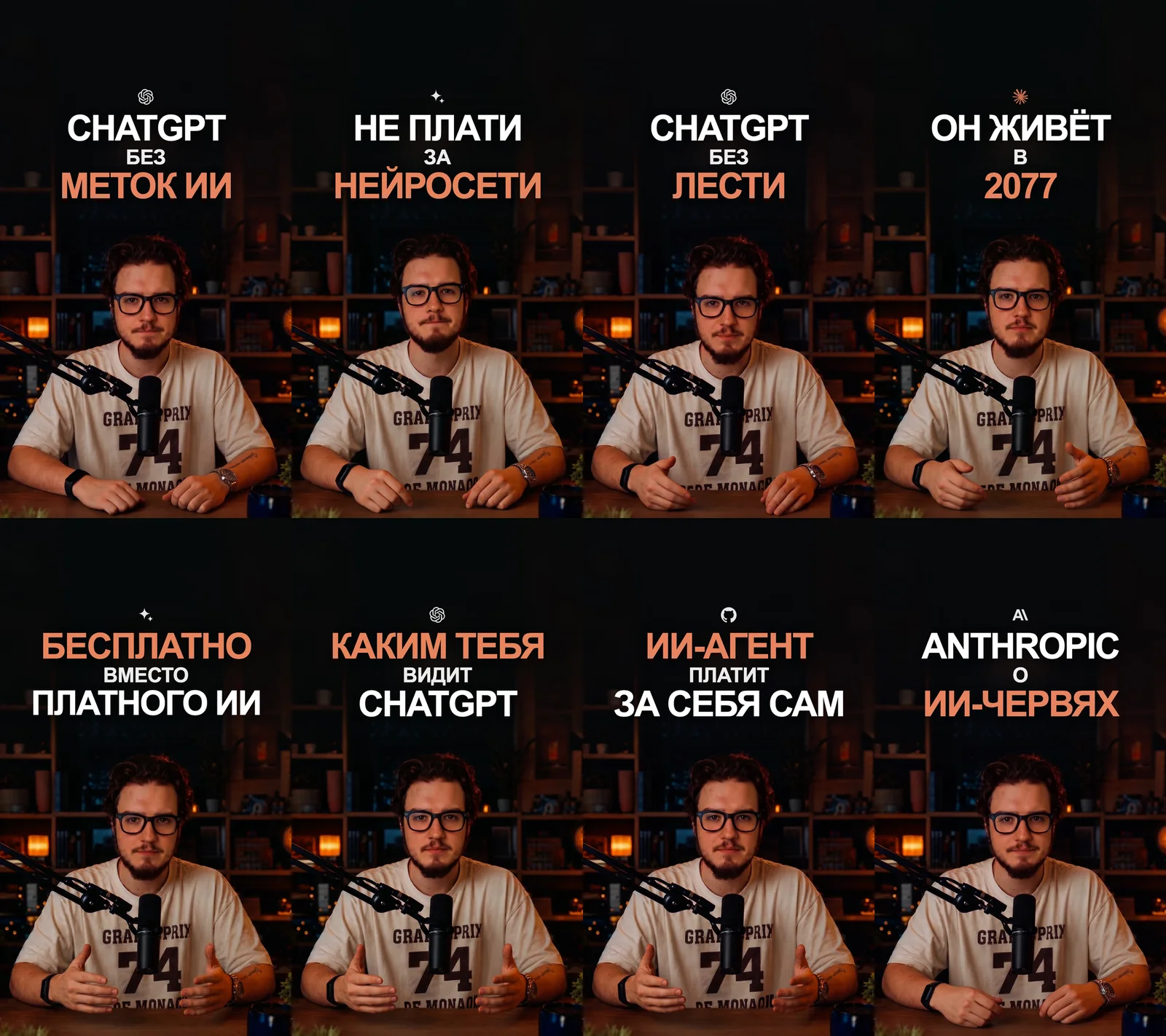
The reels themselves are AI-made, including talking-avatar videos made with our founder’s HeyGen digital twin, in Russian and English. The goal was simple: schedule them as trial reels through an API, every day, without anyone opening the Instagram app.
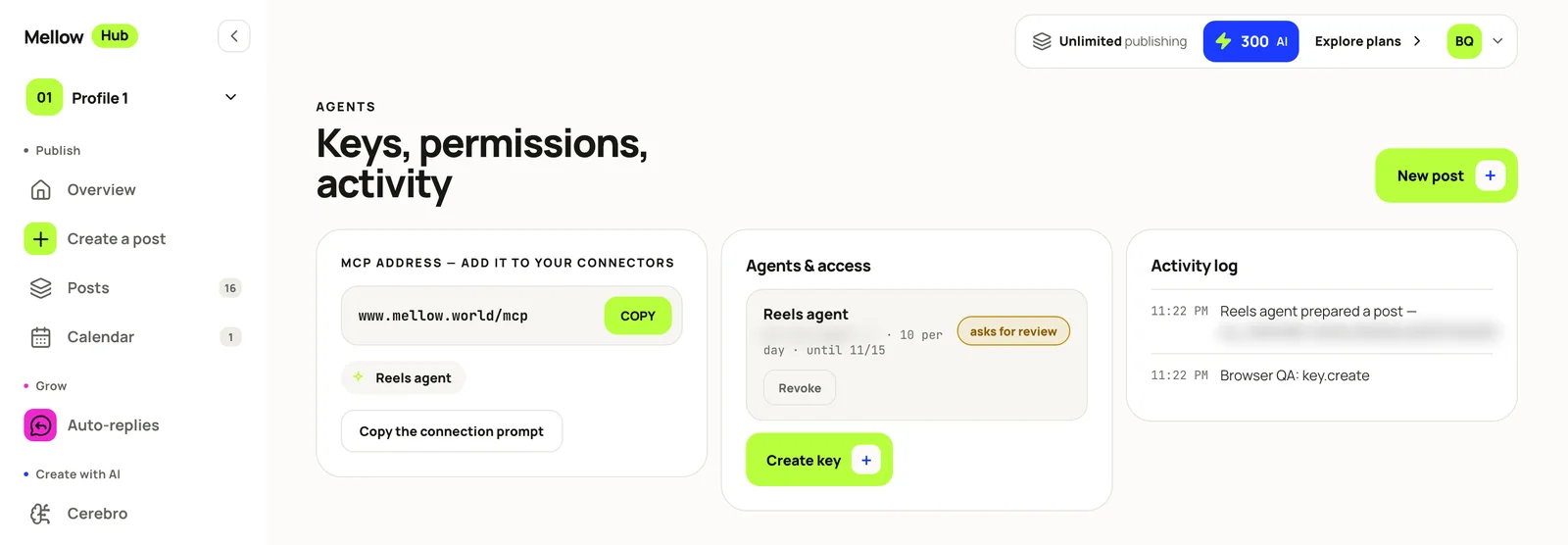
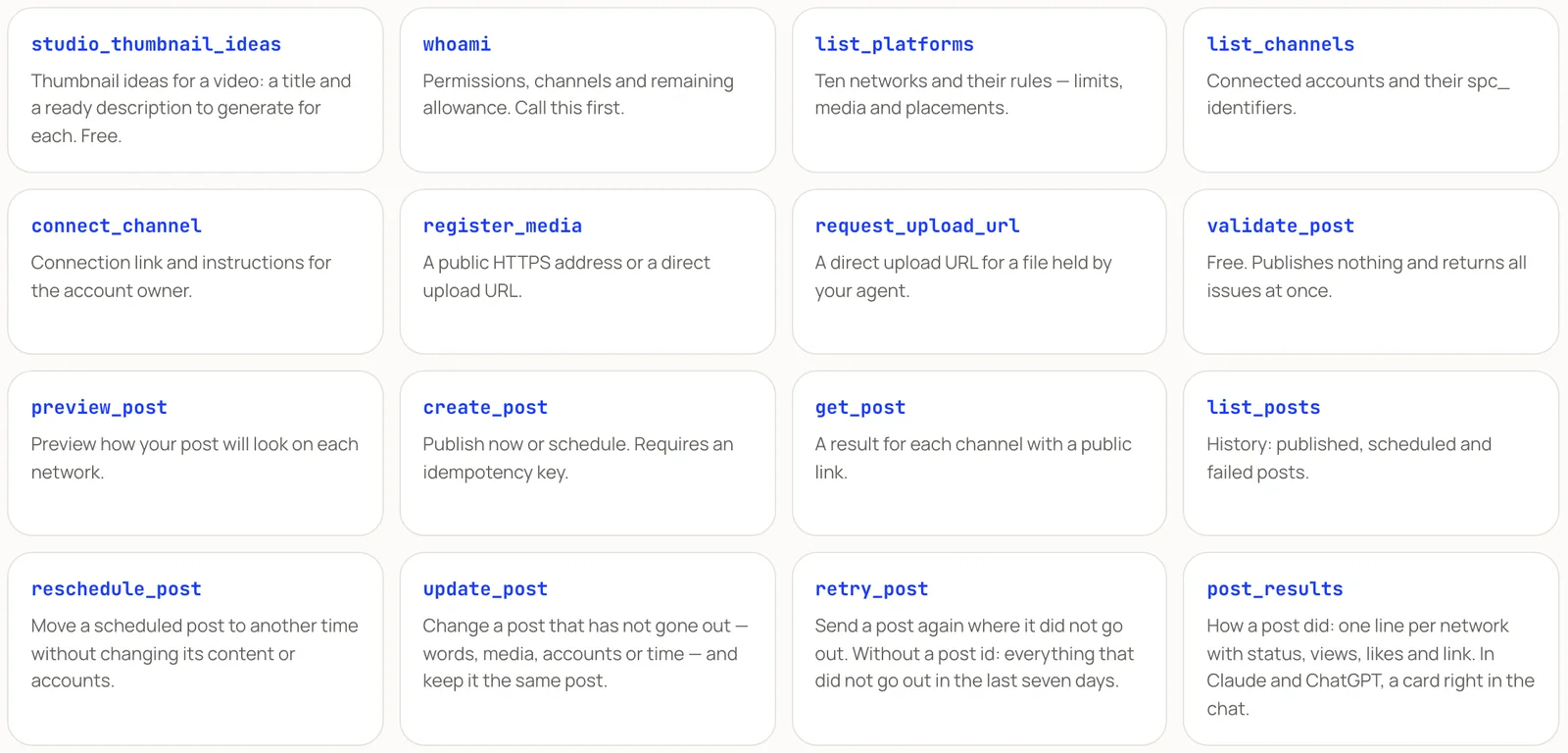
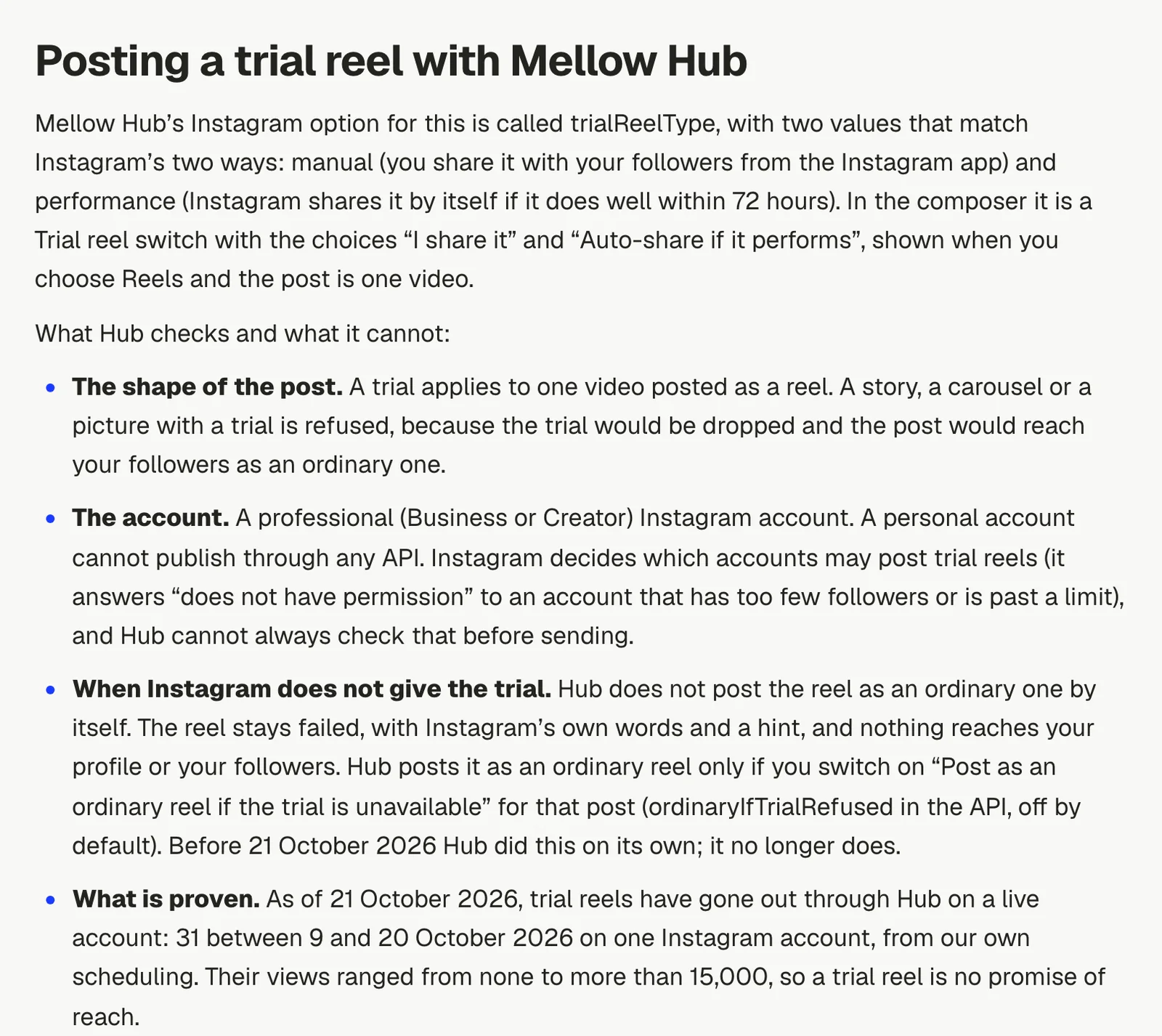
Mellow Hub reaches most Instagram accounts through its publishing provider, which passes our trial option on to Meta as the container’s trial parameters with a graduation strategy, MANUAL or SS_PERFORMANCE. For accounts connected through our own Meta app, Hub calls Meta itself, through the container-then-publish route of our answer on publishing to Instagram with the API.
What we did, step by step
- Guarded the shape of the post (9 October 2026). Reading the provider’s open-source Instagram client, we found it sends trial parameters only for one video that is not a story, and drops them silently from a story, a picture or a carousel. Such a post would have gone to the followers as an ordinary one. Hub now refuses a trial on anything but a single video reel, before sending.
- Met the first refusal (11 October, 16:00 UTC). The founder’s English account, then with 43 followers, had its first trial reel refused: “Application does not have permission for this action”. The same day, through the same provider app, five trial reels were published on @wlad_kowalski, with 3,694 followers.
- Saw the wrong message. Hub read “permission” as an expired sign-in. The reel stood as failed and the account’s card said “sign-in needed”, over an account whose ordinary reels had gone out on 9 and 10 October.
- Set a rule the same night. Our founder: under 200 followers a reel is not sent as a trial, that is not an error, and nobody is asked to sign in again. The number 200 is ours; Instagram publishes none.
- Built it two ways. Through our own Meta app the account’s follower count is read before every sending, and under 200 the trial is left off. Through the provider there is no follower count, so Instagram’s refusal is the count: the refused trial was turned into an ordinary reel and handed over again. Live at 20:59 UTC on 11 October; at 21:05:32 UTC the reel refused that afternoon went out as an ordinary reel.
- Remembered refusals, then learned to forget them (14 October). At first a refused account got ordinary reels for a week, and every such reel renewed the week, so an account that grew was never asked again. Now only Instagram’s own refusal is remembered, for seven days; the first trial due after that asks Instagram again.
- Made the fallback opt-in (21 October). Our founder did not want these reels on his ordinary profile at all, and asked that Hub never publish a reel in the ordinary format when the trial does not go through. The default became strict. A refused trial now stays failed with Instagram’s own words, and nothing is posted. The ordinary-reel fallback is a per-post switch, “Post as an ordinary reel if the trial is not available” (
ordinaryIfTrialRefusedin the API), off unless set. It went live at 10:12 UTC on 21 October, before 37 queued trial reels began going out at 12:00 UTC.
Results
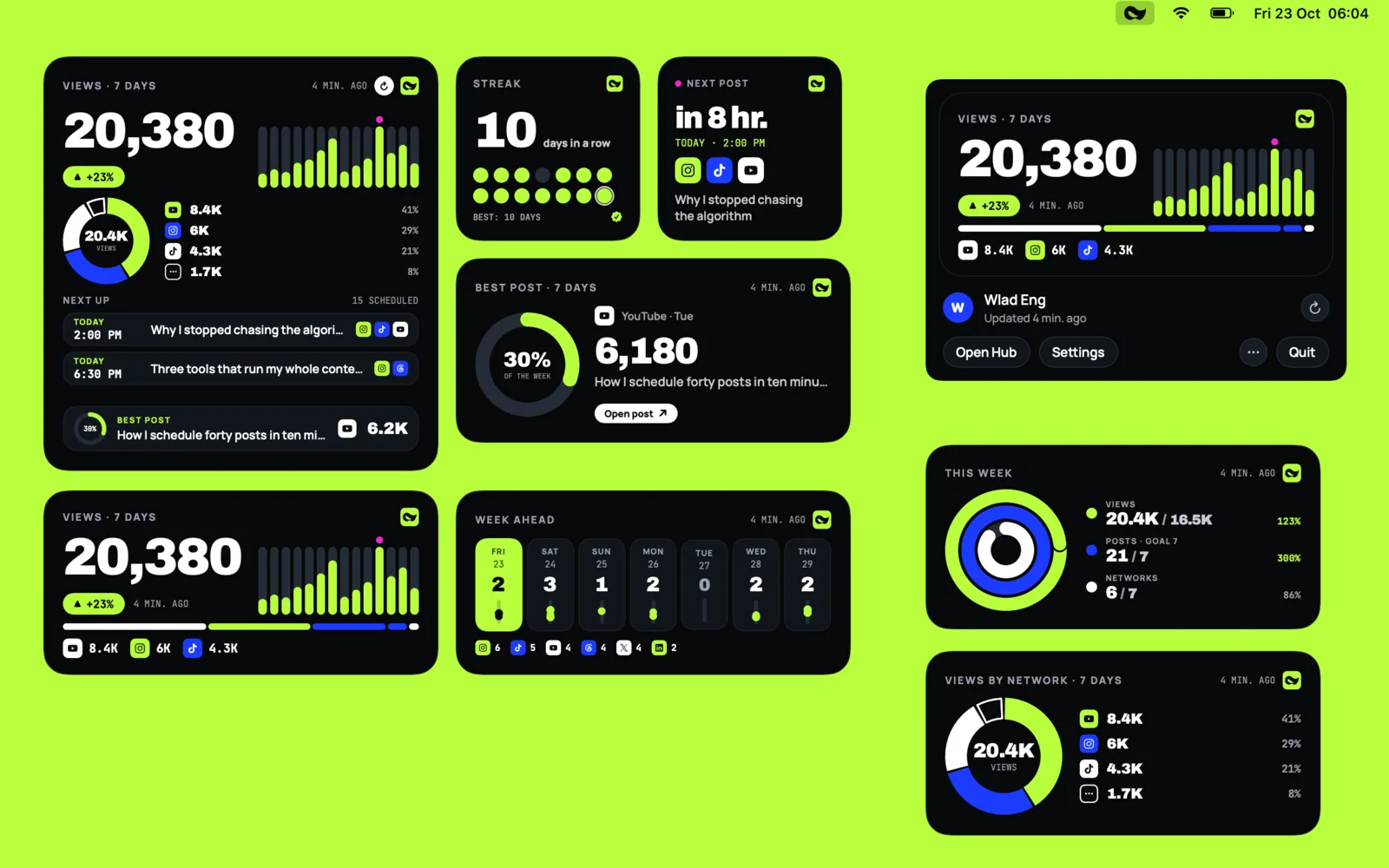
- Where trial reels worked. Between 9 and 20 October 2026, 31 trial reels went out through Hub on @wlad_kowalski. Three did well: 15,284, 2,301 and 1,127 views. Seventeen reached 123 to 596. Eleven stood at zero views and zero reach in every time slot of the day. A trial reel is no promise of reach, and Instagram publishes no success rates; we do not know why those eleven got nothing.
- The queue under the strict rule. By 22 October, 15 of the 37 queued trial reels had been published and 22 were scheduled, with no refusal.
- The refusal path, proven. On 11 October a refused trial reel on the small account went out as an ordinary one six minutes after the fix went live.
What did not work, and what we changed
- A permission error is not a sign-in error. Treating the two the same put a false “sign-in needed” on a healthy account. Hub now reads a trial refusal by the post’s own settings, and only once: a second refusal after the trial is off really is about permissions.
- A provider’s shared settings. Between 11 and 13 October the small account’s reels still went out late. Reels queued before Hub knew of the refusal were refused about 28 minutes after their time and went out 30 to 35 minutes late. One reel due at 16:00 UTC went out at 18:39, 2 hours 40 minutes late: the trial was still on the provider’s Instagram block shared by every account of the post, and an account’s own settings could not remove it. With the trial gone from Hub’s own row, the refusal no longer looked like a refused trial, and the word “permission” made it a sign-in failure again. The fix, live at 19:13 UTC that day: an option any account takes back is kept off the shared block, and a reel already waiting at the provider is made ordinary there ahead of its time.
- We kept sending trials to the small account. Before the fix it was our own content pipeline that kept asking for trials on an account under the rule. The pipeline now leaves the trial off for that profile.
- Silent fallback. Turning a refused trial into an ordinary reel was convenient and against what the account owner wanted. Strict by default is the right answer for anyone who uses trials to keep experiments off their profile.
- Still unproven live, as of 22 October: Instagram refusing one of the strict queued reels. The expected result is a failed post with Instagram’s words and nothing published.
How to do it yourself
- Send a trial only on a single video reel. Through the Instagram Graph API that is a REELS container with trial parameters and a graduation strategy, MANUAL or SS_PERFORMANCE, as Meta’s content publishing guide describes under Trial Reels posts. Check that whatever sits between you and Meta does not drop the parameters for other formats.
- Read the follower count if you can. With Instagram Login you can read it before sending. Instagram names no threshold; we saw 43 refused and 3,694 accepted, and use 200.
- Read “Application does not have permission for this action” on a trial as a trial refusal. Do not send the owner to sign in again.
- Decide before sending what a refusal means. Fail and say so, or fall back to an ordinary reel. Ask the owner; do not decide for them.
- Remember a refusal with an expiry. Ask Instagram again after a week or so, because accounts grow.
- When you take the trial off, put the reel on the profile. An ordinary reel needs share-to-feed on; a trial reel did not.
- Or use a tool that does this. In Mellow Hub the composer has a Trial reel switch (“I share it” or “Auto-share if it performs”) and, under it, the opt-in fallback.
Numbers at a glance
| What | Figure |
|---|---|
| Account refused a trial reel, 11 Oct 2026 | 43 followers |
| Account given trial reels the same day | 3,694 followers |
| Mellow Hub’s floor for sending a trial | 200 followers (our rule) |
| Trial reels on one account, 9–20 Oct 2026 | 31: 3 above 1,000 views, 17 at 123–596, 11 at zero |
| Worst delay before the shared-block fix | 2 h 40 min |
| How long a refusal is remembered | 7 days |
| Trial reels queued under the strict rule, 21–24 Oct | 37 |