
The situation
At the start of October 2026 our second brand profile in Mellow Hub had a week of short English reels queued: 56 of them, each going to Instagram, Threads and YouTube Shorts at set times, about eight posts a day. On 1 October 2026 at 21:31 UTC the first one went out. Instagram and Threads published it. YouTube refused it:
Nothing was wrong with the video, the channel or the schedule. The refusal was about whose Google app did the uploading, and it is a problem for every scheduling tool that uploads to YouTube.
Two limits that both look like “too many uploads”
A tool uploads to YouTube through a Google Cloud project with the YouTube Data API switched on, and the quota belongs to that project. Google’s quota page, as we read it in October 2026, has given videos.insert a bucket of its own since 1 June 2026: 100 calls a day per project by default, one unit each, reset at midnight Pacific time. The older rule of thumb, 1,600 units per upload and about six uploads a day, is out of date.
Mellow Hub publishes through Post for Me, a publishing API. In its quick-start mode every customer connects YouTube through Post for Me’s own Google app: on 2 October the connect link carried their client and returned to their domain. So those 100 uploads a day were shared by everyone using that app, and on 1 October they were spent by 14:31 Pacific time.
The second limit appeared two days later and has nothing to do with apps:
| The project’s quota | The channel’s cap | |
|---|---|---|
| YouTube’s words | 429 “Quota exceeded … Video Uploads per day” | 400 “The user has exceeded the number of videos they may upload” (uploadLimitExceeded) |
| Whose | the Google project of the app that uploads, shared by all its users | one channel, counted across the web, the phone app and every API app |
| Size | 100 uploads a day by default | not published; varies by country and channel history (YouTube Help) |
| Starts over | midnight Pacific time | after 24 hours |
| Raised by | Google’s audit and quota extension, weeks | verifying the channel for advanced features |
What we did, step by step
- Stopped calling it a failure (2 October). Hub’s minute processor, which publishes scheduled posts like those in our answer on scheduling YouTube Shorts, now recognises the refusal, moves that one YouTube upload to ten minutes after the next midnight Pacific and hands it to the provider again as an upload of its own, at most three times. The person sees a post that is waiting, with its time; the journal records each retry. Within a minute of the deploy the first refused reel was moved to 2 October 07:10 UTC.
- Moved our own channel to our own Google app (2 October). Hub already had its own Google Cloud project, set up on 6–9 September, with nothing yet submitted to Google. Our founder saved its OAuth client into Hub’s own project at the provider and reconnected the channel through it, past Google’s “unverified app” screen. The 53 waiting posts were cancelled and created again at the same times on the reconnected channel. Our uploads now draw on a project quota nobody else spends.
- Met the second limit (3 October). At 00:05 and 02:02 UTC YouTube refused two reels with the channel’s cap. The channel had taken 10 uploads in 24 hours: three retries through the old app and seven through ours. Hub’s retry knew that sentence, but the database query that picks refusals up still looked only for the project quota’s wording, so both reels stood as failed. The query was fixed that morning, with a test that holds the pattern and the query together, and both reels were moved to 4 October 07:10 UTC.
- Asked for a bigger channel cap (3 October). The same day our founder requested the channel’s verification for YouTube’s advanced features.
Results
- The shared-quota refusal never came back after the channel moved to our own app on 2 October.
- Both deferred reels published at 07:11 UTC on 4 October, one retry each.
- From 07:11 UTC on 3 October to 07:11 UTC on 4 October the channel accepted 11 uploads (9 scheduled and 2 retries) with no refusal. On 2–3 October the 11th upload in 24 hours had been refused, so the cap looks raised by the verification request. That is likely, not confirmed: YouTube does not say.
- With about nine YouTube uploads a day on that profile against a cap that had sat near ten, one or two night uploads could still slip to the morning. The retry covers that without anyone pressing a button.
What did not work, and what is still open
- Our own app is not verified yet. Connecting through it shows “Google hasn’t verified this app”, and an unverified app can be granted by at most 100 people. So in our notes of 2 October customers stay on the provider’s app until Google has checked our branding, our data access and then our quota request.
- More quota is slow. The YouTube API Services audit and quota extension form takes weeks, and Google’s developer policies (III.D.1.c) allow exactly one API project per API client, so spreading uploads over several projects is not allowed.
- Changing provider would not have helped. Any tool that uploads through one shared Google app spends one shared quota, and moving costs every connection.
- Our own bug. The pattern and the query disagreed for a day and two reels stood as failed. A single test now pins them together.
- The error invites the wrong conclusion. Both refusals say “upload limit”; it is easy to blame the channel or the file. Neither was about the video.
How to handle it yourself
- Read the words. 429 “Video Uploads per day” is the uploading project’s quota; 400 “exceeded the number of videos they may upload” is your channel’s cap. Neither means the video is bad.
- Building your own integration: your Google Cloud project starts with 100 uploads a day. Apply through the audit and quota extension form early, because it takes weeks, and keep to one project per API client.
- Using a scheduler: ask whether it uploads through its own shared Google app or lets you connect your own. A shared quota resets at midnight Pacific and runs out later in the Pacific day, so earlier slots are safer.
- Keep under the channel’s cap: verify the channel for advanced features (phone plus channel history or ID) and spread uploads across the day. Long videos can go up a day early as private with a publish time, as in our case on publishAt.
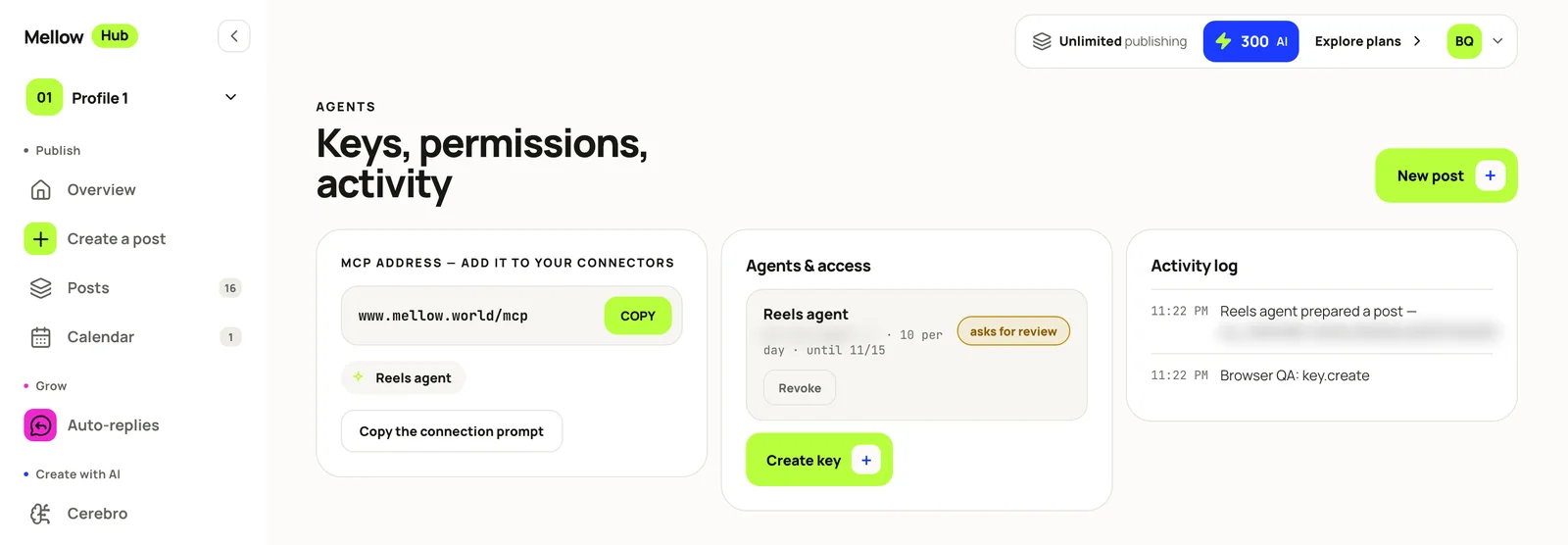
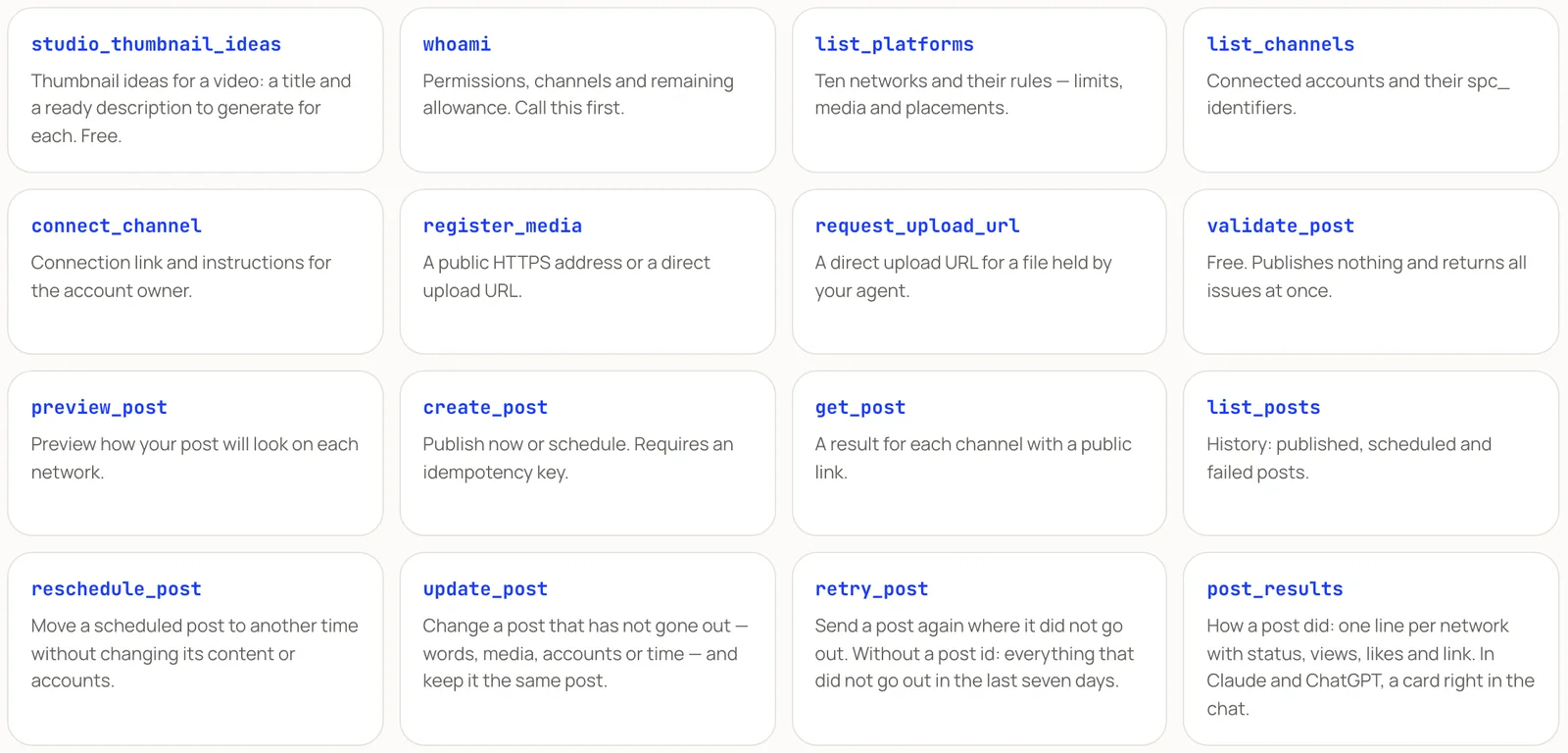
- Retry the refused upload instead of posting it again as a new post, or you get duplicates. In Mellow Hub a quota refusal waits for the reset and is uploaded again by itself; an agent connected through the YouTube MCP guide can also call
retry_post. Without a tool, upload it again in YouTube Studio after midnight Pacific.
Numbers at a glance
| Value | Date | |
|---|---|---|
| Reels queued | 56 | 1 Oct 2026 |
| Project upload quota | 100 a day | Google, read Oct 2026 |
| Quota reset | midnight Pacific | Google, read Oct 2026 |
| Hub’s retries | up to 3 | since 2 Oct 2026 |
| Uploads before the channel cap | 10 in 24 h | 3 Oct 2026 |
| Uploads accepted after verification request | 11 in 24 h | 3–4 Oct 2026 |
| Posts re-created on our own app | 53 | 2 Oct 2026 |